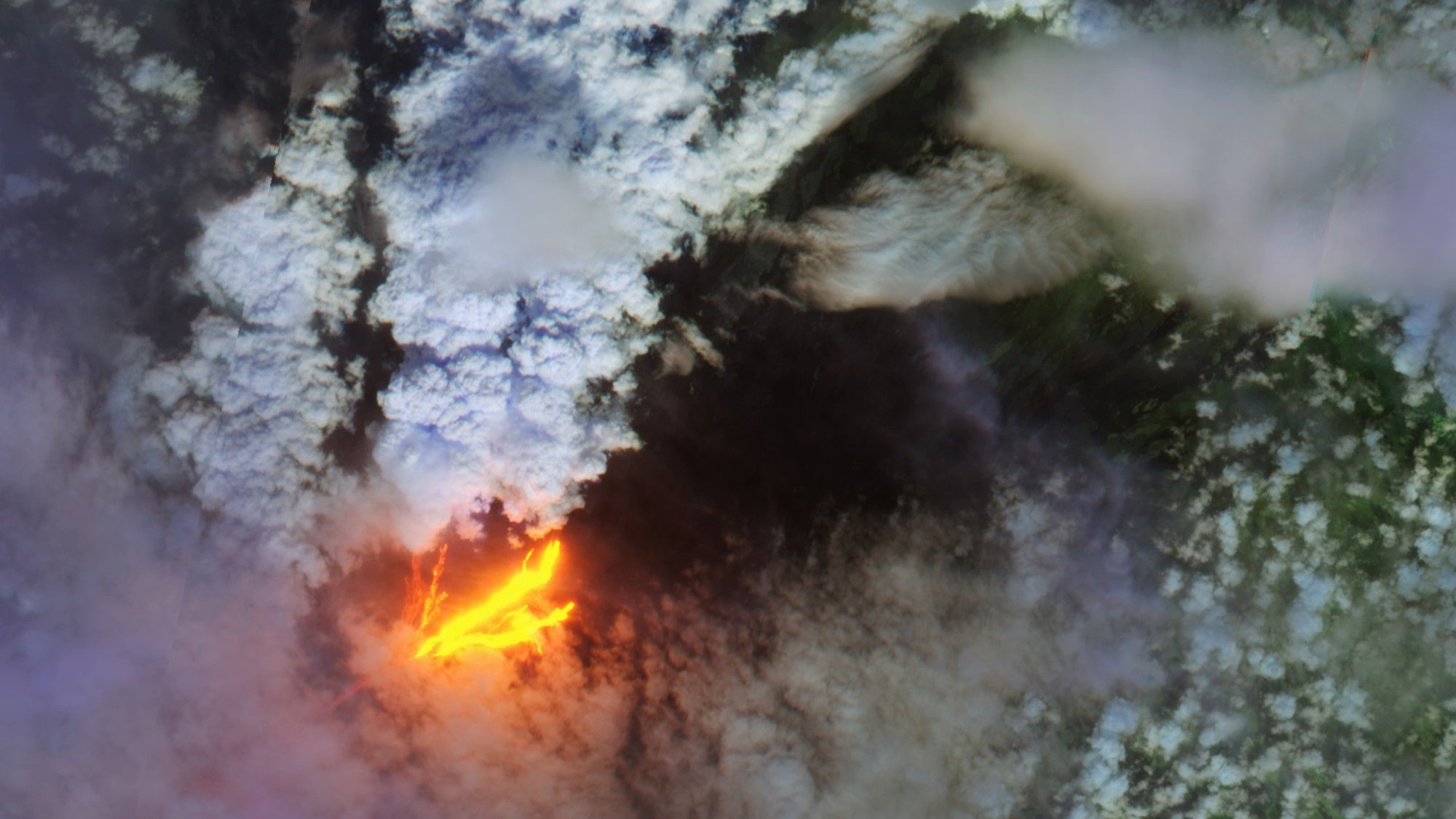
The enigmatic planet Venus has long been the focus of scientific curiosity, particularly regarding its geological activity. With its thick atmosphere and extreme surface conditions, Venus presents a unique challenge in understanding its current state. Recent evidence suggesting that the planet may still be volcanically active has reignited interest, especially as researchers analyze data from a substantial eruption that occurred in Hawaii in 2022. This eruption may provide crucial insights into the processes that could be occurring on Venus today.
The 2022 Hawaiian eruption, which took place on the Big Island, was one of the most significant volcanic events in recent years. Scientists observed extensive lava flows and explosive outgassing, which have left behind a wealth of data about volcanic processes on Earth. This information is particularly valuable for comparative planetology — the study of planetary processes across different celestial bodies. By applying what they learned from the Hawaiian eruption, researchers can draw parallels with Venus’s geological activity, especially considering the planet's similar volcanic features, such as extensive shield volcanoes and lava plains.
One key aspect of the Hawaiian eruption was the analysis of volcanic gases released into the atmosphere. These gases, particularly sulfur dioxide and water vapor, play a crucial role in understanding volcanic mechanisms. On Venus, the presence of sulfuric acid clouds and the detection of surface features resembling recent lava flows suggest that volcanism could still be occurring. By examining the dynamics of gas emissions from the Hawaiian eruption, scientists may be able to infer the potential for similar processes on Venus, lending credence to the idea that our neighboring planet might still be an active volcanic world.
This research is timely as missions to Venus, such as NASA’s DAVINCI+ and VERITAS, are on the horizon, with plans to launch in the coming years. These missions aim to gather detailed data on the planet's atmosphere and surface composition, which could either confirm or refute the hypothesis of ongoing volcanic activity. The findings from the Hawaiian eruption will likely influence the scientific community's expectations and objectives for these upcoming missions, as they provide a contemporary framework for understanding volcanic processes.
Moreover, the implications of discovering active volcanism on Venus extend beyond mere curiosity. If confirmed, it would suggest that Venus is a dynamic environment, potentially reshaping our understanding of planetary evolution and atmospheres in the solar system. It could also have ramifications for astrobiology, as volcanic activity is often associated with the potential for habitable conditions, albeit in a very different context than what we find on Earth.
CuraFeed Take: The intersection of volcanic activity on Earth and Venus underscores the importance of comparative planetary science. The 2022 Hawaiian eruption not only enhances our understanding of terrestrial volcanism but also serves as a critical analog for future explorations of Venus. As we prepare for upcoming missions, the stakes are high: a confirmation of active volcanism could position Venus as a prime candidate for further exploration and study, while also reshaping our broader understanding of planetary dynamics and the potential for life beyond our planet. Watch closely as new data emerges from both Earth and Venus, as the implications for planetary science could be profound.