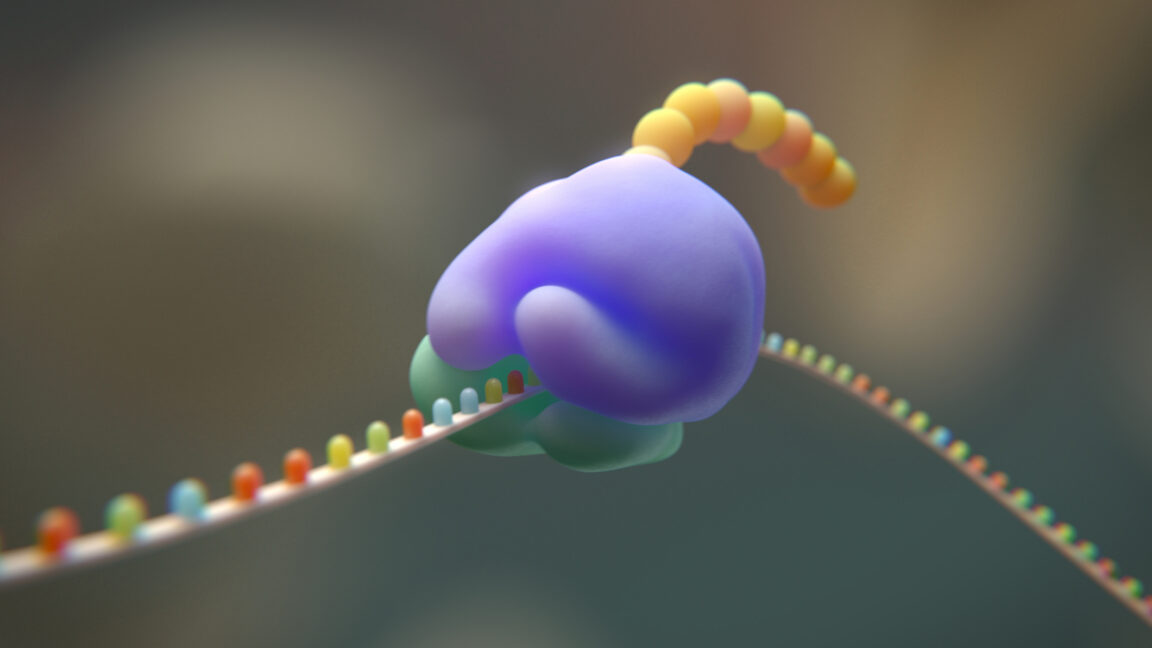
In a stunning leap forward for synthetic biology, researchers have achieved a monumental shift in the genetic code, reducing the number of amino acids from 20 to 19. This change may seem small on the surface, but it carries profound implications for our understanding of life itself and the future of biotechnology. As the world grapples with pressing challenges, such as antibiotic resistance and the need for sustainable bio-manufacturing, this innovative approach could pave the way for new solutions that were once thought impossible.
The study, conducted by a collaborative team of scientists using cutting-edge artificial intelligence tools, focuses on reengineering the ribosome – the cellular machinery responsible for protein synthesis. By modifying the ribosome’s structure, the team was able to create a new version that operates effectively with one less amino acid. This breakthrough not only highlights the potential of AI in accelerating biological research but also challenges the long-held notion that life is strictly defined by its 20 amino acids.
Key players in this research include experts from various institutions who brought together their expertise in molecular biology, computer science, and bioengineering. Utilizing machine learning algorithms, the team analyzed vast amounts of genetic data to identify how ribosome components could be adjusted to accommodate this reduction in amino acids. Their findings, published in a leading scientific journal, demonstrate not just the feasibility of this approach, but also its potential to create proteins with unique properties that could revolutionize pharmaceuticals and biomanufacturing.
This research fits into a broader context of ongoing advancements in artificial intelligence and synthetic biology. As AI continues to evolve, its application in genetic engineering is becoming more pronounced, offering unprecedented precision and efficiency in designing biological systems. Other recent breakthroughs, such as CRISPR technology, have already showcased the potential for gene editing, and this new study further expands the toolkit available to scientists. By redefining the genetic code, researchers are not only exploring the limits of life but also setting the stage for innovations that could transform healthcare and environmental sustainability.
CuraFeed Take: The implications of reducing the genetic code from 20 to 19 amino acids are vast. This discovery could lead to the creation of entirely new classes of proteins with tailored functions, which might be crucial in developing novel drugs or bioplastics. However, while this breakthrough opens exciting avenues, it also raises ethical questions about the manipulation of life’s fundamental building blocks. As we move forward, it will be essential to monitor how these advancements are applied and regulated. Will this lead to a new age of synthetic life forms, or will it spark a debate over the boundaries of genetic engineering? The scientific community and society at large must engage in these discussions as we step into this uncharted territory.