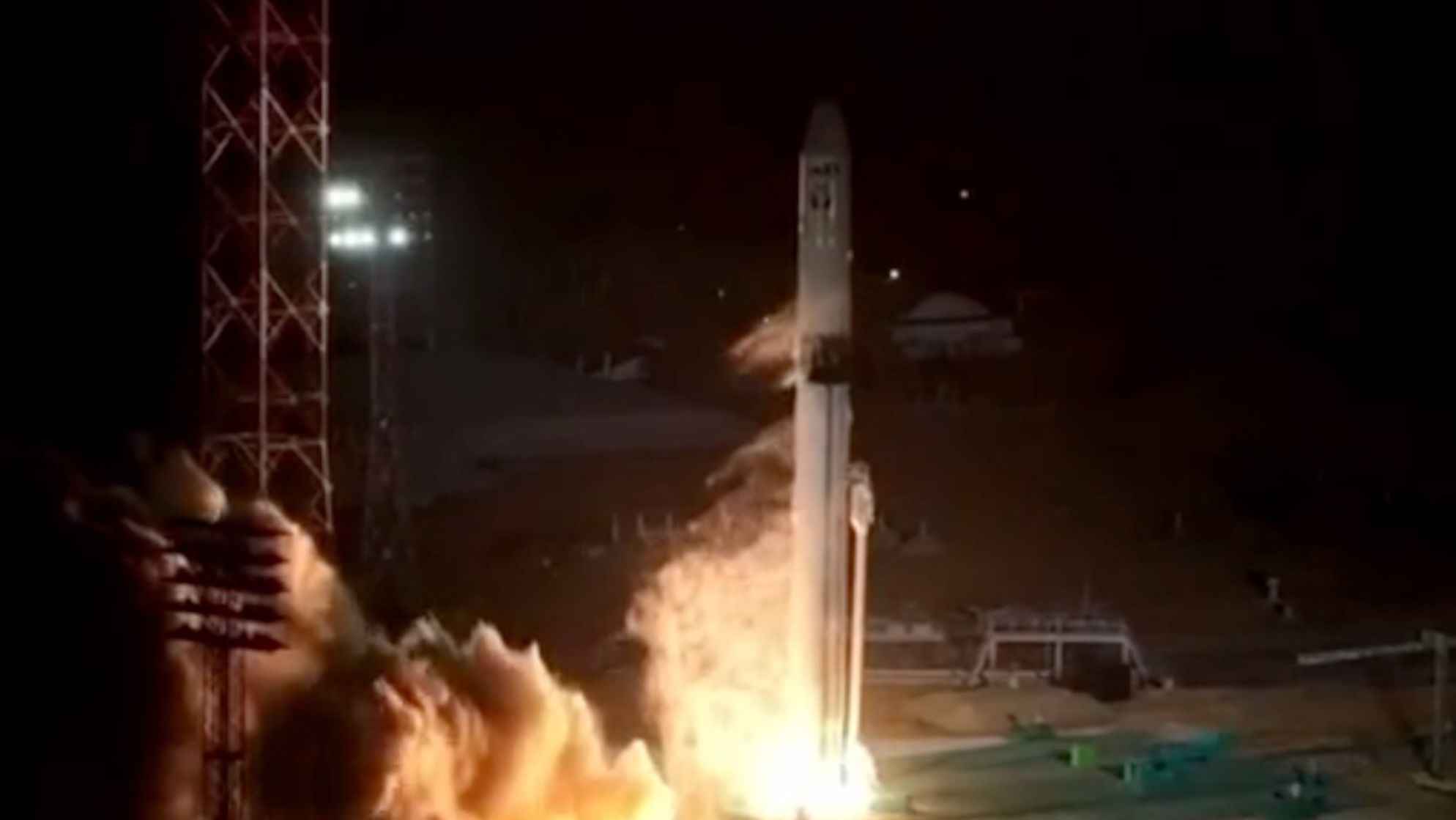
In a historic moment for Russia's space program, the Soyuz 5 rocket successfully lifted off from the Baikonur Cosmodrome on April 30, 2026, marking its first operational flight. This launch is not just a technical achievement; it represents a renewed emphasis on domestic capabilities in an era where geopolitical tensions are influencing space exploration strategies. As nations around the globe continue to invest heavily in their space infrastructures, the Soyuz 5's debut is a timely reminder of Russia's enduring prowess in aerospace engineering.
The Soyuz 5 is designed as a medium-lift vehicle, capable of delivering payloads of up to 17 tons to low Earth orbit (LEO). It utilizes a more advanced configuration than its predecessors, featuring a new engine design that promises enhanced efficiency and reliability. This rocket is part of a broader initiative to modernize Russia’s space launch capabilities, which have faced challenges in recent years. The successful launch demonstrates not only the rocket's capabilities but also the effectiveness of Russia's current aerospace development strategies.
In terms of mission specifics, the Soyuz 5's inaugural flight included a series of tests designed to evaluate its performance under various conditions. The payload for this launch encompassed a suite of scientific instruments aimed at monitoring space weather and atmospheric changes, which are crucial for future deep space missions. The flawless execution of this mission provides critical data that will inform subsequent launches and enhance understanding of orbital mechanics in LEO.
This achievement is particularly significant as it highlights Russia's strategic push to regain its foothold in the competitive space sector. The Soyuz 5 is expected to fill the gap left by older models while competing with emerging commercial launch services, especially from the United States and private companies like SpaceX. With a growing emphasis on international collaboration in space exploration, the successful deployment of the Soyuz 5 could attract global partnerships, enhancing Russia's position as a key player in future space endeavors.
CuraFeed Take: The successful debut of the Soyuz 5 is a critical turning point for Russian aerospace, signaling its intent to reclaim a leading role in the global space launch market. As the rocket progresses through its testing phases, stakeholders should monitor its performance closely, particularly in the context of international collaborations and commercial applications. The real implications of this launch will unfold as Russia seeks to expand its partnerships, potentially reshaping the dynamics of global space exploration in the years to come.